What Are the Top Types of Stone Tiles?
Stone tiles really stay a popular pick for flooring, walls, kitchens, and even outdoor spaces because they bring a natural variation that’s hard to beat, along with durability that lasts for years. In fact, Grand View Research pegged the global natural stone market at around USD 51.5 billion in 2023, and Fortune Business Insights expects it to keep growing through 2032. Just a heads-up though — those reports cover the bigger picture of natural stone categories, not just Stone Tiles specifically. That’s an important distinction to keep in mind.
Jim Hieb, CEO of the Natural Stone Institute, puts it nicely: “Natural stone is a product of nature, and every piece is unique.” Basically, that means two limestone tiles might look a bit different — one could have a different shade, some fossil marks, or surface variations. Those aren’t flaws; they're just part of what makes each piece special.
In this guide, we’re looking at some of the top kinds of Stone Tiles—marble, granite, limestone, travertine, slate, and quartzite. Each one comes with its own quirks, like how hard they are, their porosity, how much maintenance they need, and how they look. For example, a polished marble floor can reflect light beautifully, but be aware that it might show etching or stains if it’s next to a kitchen sink. Slate, on the other hand, provides a great texture underfoot, but its uneven cleft surfaces can make cleaning a bit tricky—small details like these really matter.
Market trends can tell us a lot, but they don’t tell the whole story. Things like the installation conditions, sealing, local climate, and foot traffic all impact how well your tiles will perform in real life. Even experts can’t predict every detail — a tile you pick from a showroom might look perfect in the store, but after installing on 30 square meters, it might appear a little different. That’s a tough truth to face, but it’s something to keep in mind. Ultimately, your best choice isn’t just about what’s trendy; it’s about how you’re going to actually use the space and what fits your lifestyle.

Table of Contents [Hide]
1 Stone Tiles: Definition, Uses, and Key Characteristics
2 Granite Tiles: Strength, Durability, and Ideal Applications
3 Marble Tiles: Appearance, Varieties, and Maintenance Needs
4 Slate Tiles: Texture, Performance, and Suitable Locations
5 Travertine Tiles: Natural Features, Finishes, and Care
6 Limestone and Onyx Tiles: Differences, Benefits, and Limitations
Stone Tiles: Definition, Uses, and Key Characteristics
Stone tiles are thin, cut pieces of natural rock used for floors, walls, counters, and outdoor surfaces. Common types include marble, granite, limestone, travertine, slate, and quartzite. Each has a different mineral structure, surface texture, and maintenance requirement. Granite usually offers strong scratch resistance, while marble provides visible veining but can react with acidic cleaners. Slate adds grip underfoot, although its uneven surface may collect dirt.
Natural stone is not perfectly uniform. Shade, pores, fossil marks, and small pits can appear within one order. That variation is part of the material’s character, but it can complicate replacement work. A showroom sample may mislead. Check several tiles under daylight before installation. The stone industry remains substantial: Grand View Research estimated the global natural stone market at about 33 billion dollars in 2023, with growth near 5 percent annually through 2030. The U.S. Geological Survey’s 2024 Mineral Commodity Summaries also treats dimension stone as a major construction-material category, covering quarried blocks later processed into products such as tiles. For bathrooms, sealing matters because porous limestone and travertine can absorb water. Outdoor tiles need suitable frost resistance and slip performance. Polished stone looks refined, but wet floors can become hazardous. Surface beauty is not enough. A durable specification should consider absorption, abrasion, thickness, installation method, and expected traffic. Mistakes often begin when appearance receives more attention than performance.
What Are the Top Types of Stone Tiles? - Stone Tiles: Definition, Uses, and Key Characteristics
| Stone Tile Type | Geological Classification | Typical Appearance | Common Uses | Durability | Water and Stain Resistance | Maintenance Requirements | Key Consideration |
|---|---|---|---|---|---|---|---|
| Granite | Igneous rock | Speckled or granular patterns in a wide range of colors | Kitchen countertops, floors, stairs, exterior paving, and high-traffic areas | Very high | Generally low porosity; sealing improves resistance to staining | Routine cleaning; periodic resealing may be needed depending on finish and use | One of the hardest and most abrasion-resistant natural stones |
| Marble | Metamorphic rock | Distinctive veining with polished or honed surfaces | Bathrooms, wall cladding, foyers, fireplaces, and decorative flooring | High, but softer than granite | Moderately porous and vulnerable to acidic substances | Prompt spill removal, pH-neutral cleaners, and regular sealing | Acids such as lemon juice and vinegar can etch the surface |
| Limestone | Sedimentary rock | Soft, earthy colors with a relatively uniform or subtly textured look | Interior floors, walls, fireplaces, patios, and architectural details | Moderate | Porous and susceptible to staining and acid damage | Sealing, gentle cleaning, and protection from harsh chemicals | Best suited to areas where a natural, understated appearance is desired |
| Travertine | Form of limestone | Layered appearance with natural pits, pores, and warm neutral tones | Bathrooms, shower walls, floors, patios, pool surrounds, and backsplashes | Moderate to high | Porous; open voids may require filling and the surface usually needs sealing | Regular sealing, non-abrasive cleaning, and periodic filling of surface holes | Available in filled or unfilled finishes, which affect texture and upkeep |
| Slate | Metamorphic rock | Layered, cleft texture in gray, charcoal, green, brown, or rust tones | Entryways, floors, accent walls, fireplaces, patios, and roofing applications | High | Moderately porous; sealing helps reduce moisture and stain absorption | Regular sweeping, pH-neutral cleaning, and periodic resealing | Its natural cleft surface provides texture but can require more detailed cleaning |
| Quartzite | Metamorphic rock | Quartz-rich surface with crystalline patterns and varied veining | Floors, countertops, walls, outdoor paving, and high-use interior spaces | Very high | Usually low to moderate porosity; sealing is commonly recommended | Routine cleaning and periodic sealing based on the stone’s porosity | Natural quartzite is highly resistant to scratching, but labeling should be verified |
| Sandstone | Sedimentary rock | Grainy texture with earthy shades such as tan, red, cream, and brown | Patios, walkways, garden walls, feature walls, and rustic interior floors | Moderate | Porous and may absorb water, dirt, and oils | Sealing, careful pressure washing, and prompt removal of spills | Texture and color can vary significantly because it is composed of compacted mineral grains |
| Onyx | Decorative banded stone, commonly a form of calcite | Translucent layers with dramatic bands and rich color variation | Feature walls, bar fronts, vanity panels, backsplashes, and decorative inserts | Moderate to low | Porous and sensitive to acids, scratching, and impact | Gentle cleaning, sealing, careful installation, and protection from abrasion | Backlighting can emphasize its translucency, but it is generally better for decorative areas than heavy traffic |
| Terrazzo | Composite material with stone or glass aggregate in a cementitious or resin binder | Speckled surface with customizable aggregate size and color combinations | Commercial floors, entryways, kitchens, bathrooms, stairs, and wall panels | High when properly installed | Varies by binder and finish; sealing improves stain resistance | Regular dust removal, neutral cleaning products, and periodic resealing or refinishing | It is not a single natural stone, but it is widely used as a stone-based tile surface |
Granite Tiles: Strength, Durability, and Ideal Applications
Among the top types of stone tiles, granite stands out for strength, durability, and visual variety. Its dense structure resists scratches, heat, and daily impact better than many softer stones. In busy kitchens, granite tiles can handle dropped utensils and warm cookware with fewer surface marks. They also suit entryways, hallways, and commercial floors with heavy foot traffic.
Surface finish changes performance and appearance. Polished granite reflects light and shows detailed mineral patterns, but it can become slippery when wet. Honed granite offers a softer, matte look and better visual control over small scratches. Flamed finishes provide stronger texture for outdoor paths and covered patios. Always check the tile’s slip rating and water absorption before installation. Not every granite tile suits every location.
Installation requires a stable, level base and consistent grout joints. Uneven subfloors may cause cracks, even in strong granite. Sealing can reduce staining from coffee, oil, or muddy shoes, although it does not make the surface maintenance-free. Clean spills quickly with a pH-neutral cleaner. Avoid harsh acids. I have seen dark granite hide dust while pale varieties reveal every mark, so color choice deserves practical thought. Granite is durable, but its weight, cost, and cold feel may not suit every room.
Marble Tiles: Appearance, Varieties, and Maintenance Needs
Marble tiles remain popular because each slab offers movement, veining, and a cool, reflective surface. Polished marble brightens dim hallways, while honed marble feels softer and hides small scratches better. Common varieties include Carrara, Calacatta, and Emperador, although color and veining can vary sharply between shipments. According to Grand View Research’s 2024 natural stone market report, the global market was valued at about $33.8 billion in 2023. That demand reflects marble’s visual appeal, but not its carefree performance.
Marble is calcium carbonate, so acids can etch it. Lemon juice, vinegar, and some bathroom cleaners may leave pale marks within minutes. The Natural Stone Institute recommends pH-neutral cleaners and appropriate sealing based on stone porosity and use. In my experience, sealing reduces absorption but never makes marble stain-proof. High-traffic floors may need resealing after one to three years, while lightly used walls often need less attention. The exact interval depends on testing, cleaning habits, and finish.
Tips:Request a sample and spill-test it before installation. View it under natural light. Keep extra tiles for future repairs, because matching replacement marble can be difficult. Choose honed tiles for busy floors, and use polished tiles where visual drama matters more than slip resistance. I would also avoid judging one sample too quickly; marble can look calm in a showroom and unexpectedly busy across a full room.
Slate Tiles: Texture, Performance, and Suitable Locations
Slate tiles bring layered texture, natural color shifts, and a grounded character to interiors. Their cleft surfaces catch light unevenly, so each tile looks slightly different. This variation adds warmth, but it can also challenge precise styling. Some pieces feel rougher than expected. That is part of slate’s appeal, though not everyone enjoys it.
Slate performs well in entryways, kitchens, mudrooms, bathrooms, and covered outdoor areas. Its dense surface handles regular foot traffic when properly sealed and maintained. However, slate is not maintenance-free. Water can darken unsealed areas, while grit may collect in deeper textures. Honed slate feels smoother underfoot, but it may show scratches more clearly. Outdoor installations need suitable frost resistance and correct drainage. Local climate matters more than many product descriptions suggest.
Tips: Request several samples before choosing a color. View them in daylight and under warm indoor lighting. Check the tile’s thickness, surface texture, slip resistance, and absorption guidance. Use a qualified installer for substrate preparation and grout joints. Clean spills quickly, especially oil and colored liquids. A penetrating sealer can help protect the stone, but it will not prevent every stain. For heavily textured slate, test a small area first. A finish that looks excellent in a showroom may feel uncomfortable beside a bed or under a dining table.
Travertine Tiles: Natural Features, Finishes, and Care
Travertine remains a distinctive choice among stone tiles because each piece carries visible geological history. Its pores, cloudy bands, and small cavities form naturally, rather than through printing. The U.S. Geological Survey’s 2024 Mineral Commodity Summaries estimated U.S. dimension-stone production at about 2.6 million metric tons in 2023. That figure reflects continuing demand for durable natural materials, including limestone-based stones such as travertine.
The finish changes both appearance and daily maintenance. Honed travertine feels smooth under bare feet and hides minor scratches better than polished surfaces. Tumbled edges create a softer, aged look, especially around showers or garden thresholds. Filled tiles have their pores sealed at the factory, while unfilled tiles expose deeper texture. Beautiful, but less forgiving. The Natural Stone Institute advises using pH-neutral cleaners and avoiding acidic products, including vinegar and lemon solutions. Acid can dull the surface and leave pale etching marks.
Installation requires practical judgment. A bathroom floor needs a properly prepared substrate, consistent grout joints, and careful attention to water drainage. Sealing can reduce staining, but it does not make travertine stain-proof. Industry guidance generally recommends testing the sealer on a spare tile first, because absorption varies between batches. I would also inspect several cartons together. Color differences may be natural, yet they can look accidental if placement is careless. Travertine rewards restraint. Its imperfections are part of the material, though some spaces may need a more predictable surface.
Limestone and Onyx Tiles: Differences, Benefits, and Limitations
Limestone and onyx are both calcium-carbonate stones, but their appearances and practical roles differ. Limestone usually shows quiet layers, fossils, or sandy movement. Onyx often carries translucent bands in amber, cream, green, or white. Its glow appears when installers place lighting behind thin slabs. According to the U.S. Geological Survey’s 2024 Mineral Commodity Summaries, U.S. dimension-stone sales reached approximately 1.7 million metric tons in 2023, valued near $475 million. That figure includes several stone types, not limestone or onyx alone.
Limestone suits floors, wall cladding, fireplaces, and outdoor areas when the selected variety passes project testing. Its softer surface feels warm and natural, but acids can etch it quickly. Lemon juice can leave a dull mark. Onyx creates stronger visual drama and works well for feature walls, reception counters, and illuminated panels. However, it is generally more delicate, with visible seams and greater sensitivity to scratching, staining, and uneven support. Fabricators should review absorption, flexural strength, and slip resistance data before cutting.
The Natural Stone Institute and ASTM testing guidance both emphasize performance testing over appearance alone. That advice matters. A beautiful sample can fail in a busy entrance. Sealing improves stain resistance, but it does not make either stone maintenance-free. Cleaning products should remain pH-neutral, and harsh powders deserve skepticism. In my view, limestone offers broader everyday value, while onyx rewards controlled interiors and careful installation. That judgment is not universal. Local climate, finish, thickness, and maintenance habits can change the result.
Limestone and Onyx Tiles: Differences, Benefits, and Limitations
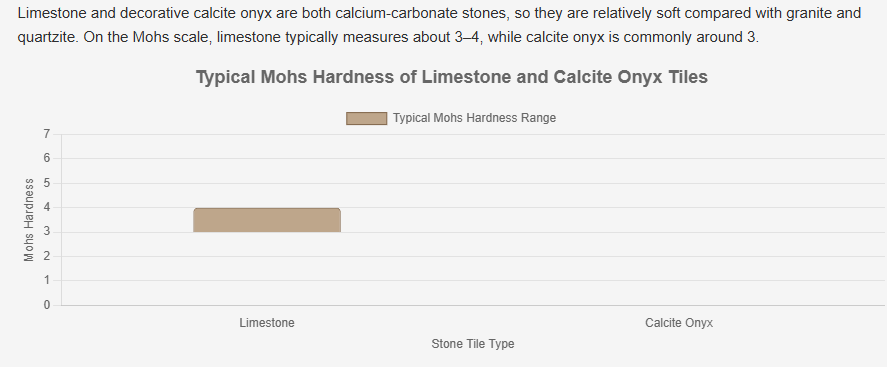
Limestone: Its natural texture and understated appearance suit floors, walls, bathrooms, and outdoor applications when properly sealed. Its limitations include susceptibility to scratching, staining, and etching from acidic substances.
Calcite onyx: Its translucent layers and dramatic patterns make it well suited to feature walls, backsplashes, countertops, and illuminated decorative panels. It requires careful handling because it can scratch, etch, chip, and absorb moisture if not correctly sealed.
The chart shows typical hardness ranges. Natural stone characteristics vary according to mineral composition, quarry location, finishing method, and surface treatment. In architectural tile use, “onyx” generally refers to decorative calcite onyx rather than siliceous quartz onyx.
FAQS
Where do slate tiles work best?
Slate suits entryways, kitchens, mudrooms, bathrooms, and covered outdoor areas. Proper sealing helps with regular foot traffic. The surface stays expressive. It is not perfectly uniform.
Is slate easy to maintain?
How should slate samples be checked?
What makes travertine visually distinctive?
Which cleaners are suitable for travertine and limestone?
Is travertine suitable for bathrooms?
How do limestone and onyx differ?
Where should onyx tiles be used?
Conclusion
Stone Tiles are natural surface materials valued for their distinctive appearance, durability, and ability to complement many interior and exterior designs. This article explains their definition, common uses, and key characteristics, helping readers understand how different stones perform in areas such as floors, walls, kitchens, bathrooms, patios, and entryways. It also highlights the importance of considering porosity, surface texture, maintenance, and location before choosing a tile.
Granite tiles are exceptionally strong and suitable for high-traffic areas, while marble offers elegant veining and a wide range of styles but requires careful maintenance. Slate provides natural texture, reliable performance, and slip resistance in suitable settings. Travertine adds organic character through its pores and layered patterns, although it needs sealing and regular care. Limestone creates a soft, understated appearance but may be more vulnerable to scratching and staining. Onyx delivers striking translucence and visual appeal, yet its delicate nature limits where it should be installed. Together, these options offer practical and decorative solutions for varied design needs.
CATEGORIES
Payment Support
-
Below payment terms accpeted by us :
1.Telegraphic Transfer(TT);
2.Irrevocable L/C at Sight;
3.100% Full Cash;
4.Credit Payment (After Becoming Our Old Client For One Year);
5.You could get prices lower than our costs after US$10,000 is recharged into your VIP card, which is valid in half year.