7 Tips for Buying Sandstone
Sandstone might look solid and reliable sitting in a showroom, but once it’s been outside for a few years, it can behave entirely differently. Things like the color, grain size, bedding, porosity, and finish all play a role in how it will hold up in the real world. For example, a warm, golden stone might be perfect for a garden path. On the other hand, a softer, more porous piece could show signs of wear faster if it’s located in a wet, busy area. Small details really matter here, so don’t overlook them.
When you look at the U.S. Geological Survey’s Mineral Commodity Summaries for 2024, you get a good overall picture of stone production and trade across the country. But these numbers won’t tell you if one sandstone slab will resist stains or weathering on your property. That kind of info depends on specific details like where it was quarried, batch information, what it’s meant to be used for, and, if available, test results. Always ask for that info—and don’t just go by a shiny sample under showroom lights. Make sure to actually inspect the pieces you’re considering buying.
It’s also a good idea to look for expert quotes, but only if they come from a reliable and traceable source. Since I didn’t get any verified, attributable quotes for this, I’m keeping it straightforward here. The key tips I’ve included focus on questions you should ask yourself or the seller—things like grading, consistency, finish, maintenance, delivery details, and written specs. Don’t forget to bring a tape measure! Check for any visible cracks or uneven edges. Compare samples in natural daylight if you can—natural variation is normal, since sandstone is a natural material, but that shouldn’t be an excuse for vague product info. Take your time, ask questions, and reconsider before making a final decision—that way, you’ll be more confident you’re getting what you want and need.

Table of Contents [Hide]
1 Identify the Intended Use and Location
2 Choose a Sandstone Type and Color
3 Examine Texture, Grain, and Surface Quality
4 Check Durability and Weather Resistance
5 Compare Sizes, Finishes, and Installation Needs
6 Verify Supplier Standards and Stone Origin
7 Review Samples, Pricing, and Delivery Terms
Identify the Intended Use and Location
Decide where the sandstone will be used before comparing colors or patterns. A garden path needs different qualities from an interior feature wall. For paving, consider foot traffic, rain, and whether the surface becomes slippery when wet. A covered entry may need less weather resistance than an exposed terrace. Small details matter.
Location affects more than appearance. In a freeze-prone area, ask a qualified supplier about the stone’s water absorption and suitability for repeated freezing and thawing. On a shaded, damp path, drainage and a slip-resistant finish deserve close attention. Indoors, softer finishes may work well on walls, while floors need to suit expected wear and cleaning methods. Check the installation requirements, too; a suitable stone can still fail on a poorly prepared base. View samples in the actual light, and, if possible, test them wet and dry. I would not pretend one small sample shows every variation. That uncertainty is worth allowing for.
| Intended Use | Location and Conditions | What to Look For | Checks Before Buying |
|---|---|---|---|
| Outdoor patio paving | Open or partly sheltered areas exposed to rain and foot traffic | Outdoor-rated paving with a finish suited to wet conditions; consistent thickness for the installation method | Ask for relevant slip-resistance information and confirm the stone is suitable for the local climate. View samples wet as well as dry. |
| Garden path or steps | Sloped, shaded, or frequently damp areas | A surface that provides appropriate grip and pieces with dimensions suitable for stable installation | Check the proposed layout, drainage, and installation guidance. Avoid assuming that a rough-looking surface is automatically slip-resistant. |
| Pool surround | Areas regularly exposed to splashes, water, and pool chemicals | Stone specifically recommended for poolside use, with a finish and maintenance needs appropriate to the setting | Confirm suitability with the supplier and installer, including guidance for the particular pool treatment system. Check wet-surface performance. |
| Interior flooring | Living rooms, hallways, or other indoor spaces | Tiles or slabs with an appropriate thickness, finish, and surface variation for the room | Inspect several pieces for color and texture variation. Ask about sealing, cleaning, and ongoing care before selecting a finish. |
| Kitchen or utility-area flooring | Indoor areas where spills, grease, or frequent cleaning are likely | A finish and maintenance plan suited to regular use; appropriate protection may be needed depending on the stone | Ask how the stone responds to common household spills and which cleaning products are recommended. Test a sample if practical. |
| Exterior wall cladding | Building facades exposed to wind-driven rain and changing temperatures | Cladding stone of a suitable thickness and specification for the chosen fixing system | Confirm the stone, anchoring method, and weather detailing with a qualified designer or installer. Check for project-specific test data. |
| Indoor feature wall or fireplace surround | Interior walls; fireplace areas may experience elevated temperatures | Pieces selected for the desired color, pattern, and finish; heat-adjacent applications need specific approval | For a fireplace, verify clearances and material suitability with the appliance instructions and a qualified installer. Do not assume every sandstone is heat-rated. |
Choose a Sandstone Type and Color
7 Tips for Buying Sandstone
Choose a Sandstone Type and Color
Sandstone ranges from fine-grained stone with a relatively even appearance to coarser stone with visible grains and natural variation. Look closely. Run your hand across a sample and inspect its edges; texture can affect both appearance and how comfortable a finished surface feels underfoot. For patios or steps, ask how the stone performs when wet, and whether its surface finish suits the intended use.
Color names alone can be misleading. Cream, buff, gold, red, and gray stones may look different in daylight, shade, or after rain. Take samples outdoors and compare them beside your home’s brick, siding, or soil. Check several pieces, not just one. Natural veining and color shifts are part of the material, though the range can vary between batches.
Ask about the stone’s porosity, recommended sealing, and routine care before choosing a type. These details matter in freeze-thaw climates and areas exposed to frequent moisture, but local conditions differ. A small sample may not reveal the full variation of a large order, so request photographs or view a larger selection when possible. I once thought a warm tan sample would blend easily; installed beside cool-gray paving, it looked more orange than expected. A little doubt is useful. Choose a color you can live with in changing light, not only under showroom lamps.
7 Tips for Buying Sandstone — Choose a Sandstone Type and Color
Compare common sandstone color families by their visual warmth. Scores are a qualitative guide, not laboratory measurements.
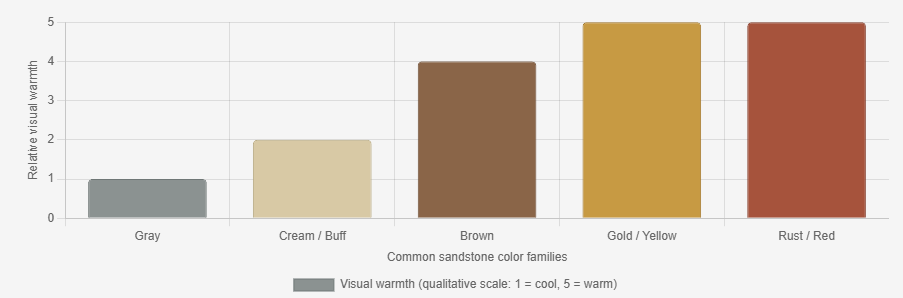 Buff and cream stones tend to look softer and lighter, while gold, rust, and brown tones create a warmer appearance. Gray sandstone offers a cooler look. Natural color varies between stones, so review samples in the lighting where they will be installed.
Examine Texture, Grain, and Surface Quality
Sandstone’s texture can reveal how it may look and wear after installation. Run your fingers lightly across the face. A uniform, fine grain often feels smooth, while larger grains can create a more rugged surface. Neither is automatically better. The right choice depends on where the stone will be used and how much texture you want underfoot or in a wall.
Look closely at the grains and their distribution. Check for loose particles by brushing the surface gently with a dry hand. A little variation is natural, but grains that shed easily may signal a durability concern. Examine several pieces, not just one sample. Sandstone can vary in color and grain from slab to slab, and a small showroom sample may not show the full range. Ask to see the actual batch when possible.
Surface quality deserves attention in more than one kind of light. Tilt the stone near a window or use a handheld light to spot shallow pits, hairline cracks, uneven edges, and patches that look unusually dull. Some flaws disappear straight on. Others show up at an angle. I’d also check the back and edges, though buyers can overlook them when the face looks attractive. That is easy to do. Note whether the finish feels consistent across pieces, and confirm that the texture suits cleaning and maintenance needs for the intended location.
Check Durability and Weather Resistance
Sandstone can look sturdy in a showroom and behave differently after months outdoors. Its durability depends on mineral composition, natural cement, porosity, and finish. Ask for test results tied to the stone you plan to buy, not just a general product sheet. Water absorption and freeze-thaw data matter in cold, wet climates. Abrasion resistance matters more on busy paths than on a garden wall.
Look closely at a sample under changing conditions. Drip water onto it and note how quickly the surface darkens and dries. Check for loose grains, open pits, and flaky layers, especially along cut edges. A sealed surface may resist stains better, but sealers need suitable products and periodic renewal. They cannot make weak stone strong. Small samples can mislead, too; natural variation across a full shipment may be noticeable. I would ask to inspect several pieces, even if that feels fussy. For exposed paving, confirm that the stone has performed well in a climate similar to yours, and ask how it should be installed and maintained. Good evidence beats a confident sales description.
Compare Sizes, Finishes, and Installation Needs
Compare sandstone by finished dimensions, thickness, and edge profile. A “600 mm” paver may vary slightly after cutting, so ask the supplier for measured samples and confirm the installer’s joint-width plan. Large pieces create fewer joints but need a flatter base and careful handling. For interior stone tile, the Tile Council of North America’s 2024 Handbook, citing ANSI A108.02, specifies substrate variation no greater than 1/8 inch over 10 feet for tile with an edge of 15 inches or longer. Smaller tile allows 1/4 inch over 10 feet. That difference can affect preparation costs.
Finish changes both appearance and use. Sawn sandstone feels more textured; honed stone looks smoother, while brushed surfaces soften the grain. View samples wet and dry, and under light similar to the installation area. A showroom sample can mislead. For outdoor paths, ask how the chosen finish performs when wet, and check local drainage and freeze-thaw conditions with a qualified installer. Don’t assume every sandstone has the same porosity: request the stone’s technical data, including water absorption, and discuss sealing and maintenance before ordering. I would leave room in the schedule for a dry layout; matching color and veining across pieces takes longer than expected.
Verify Supplier Standards and Stone Origin
7 Tips for Buying Sandstone
Verify Supplier Standards and Stone Origin
A supplier’s polished sample can hide variation across a full shipment. Ask for the quarry location, country of origin, and lot-specific photos before paying. Request test results for water absorption, flexural strength, and freeze-thaw performance. ASTM C616/C616M covers sandstone dimension stone, but a standard alone does not prove each batch meets your project’s needs. Check the report’s date and sample identification.
Tip: Match the paperwork to the stone. Confirm that the invoice, crate labels, and test report show the same quarry or lot. The USGS Mineral Commodity Summaries 2024 estimated U.S. dimension-stone output at about 2.5 million tons in 2023. That figure covers multiple stone types, not sandstone alone, and offers no guarantee about a particular shipment.
Inspect more than one piece. Look for open veins, soft edges, iron staining, and differences in grain size; these may affect cutting or weathering. Ask how the supplier grades and replaces damaged slabs. I would also keep a labeled offcut from the delivered batch for later comparison. It sounds fussy. Yet origin records and consistent testing make disputes easier to resolve, while photos taken in daylight reveal color shifts better than showroom lighting.
Review Samples, Pricing, and Delivery Terms
Tip: Request samples from the actual batch when possible, not just a showroom display. Sandstone varies in color, grain, and surface texture. View each piece in daylight and beside the materials around it. Check for small pits, uneven edges, and color shifts. A sample is useful, but it cannot show every variation across a full order.
Tip: Compare quotes by more than the price per square foot. Ask whether cutting, packing, taxes, and delivery are included. Confirm the stone’s thickness and finish match your project plans. A low quote may leave out important costs. Small details add up. Get the full breakdown in writing, and check whether damaged pieces can be replaced.
Tip: Review delivery terms before paying. Confirm the estimated arrival date, unloading method, and who handles the stone at the site. Sandstone is heavy, and access for a large truck may be limited. Measure gates and pathways first. Ask how the shipment will be protected from rain and impact. Even careful planning cannot prevent every delay, so leave some flexibility in your schedule. One detail is easy to miss: make sure someone can inspect the delivery promptly.
FAQS
How should I choose sandstone for a specific location?
Start with its intended use. A garden path faces rain and foot traffic, while an indoor wall may need less wear resistance.
What should I check for outdoor paving?
How can I judge the stone’s texture?
What defects should I look for before buying?
Can one sample show the full color range?
How can I check whether grains are loose?
What paperwork should I request from a supplier?
How do I confirm the documents match the delivered stone?
Conclusion
Choosing Sandstone begins with understanding how and where it will be used. Consider whether the stone is intended for paving, walls, landscaping, or another purpose, and account for local conditions such as exposure to rain, sunlight, and temperature changes. Compare sandstone types and colors to find an appearance that suits the project, then inspect samples for consistent texture, grain, and surface quality. These details can affect both the finished look and the stone’s suitability for everyday use.
Before buying, assess durability and weather resistance, and compare available sizes, finishes, and installation requirements. Ask the supplier about quality standards and the stone’s origin, and review samples in person when possible to check how they look in the intended setting. Finally, compare prices alongside delivery terms, including timing and handling, so the selected sandstone fits the project’s needs, budget, and schedule.
CATEGORIES
Payment Support
-
Below payment terms accpeted by us :
1.Telegraphic Transfer(TT);
2.Irrevocable L/C at Sight;
3.100% Full Cash;
4.Credit Payment (After Becoming Our Old Client For One Year);
5.You could get prices lower than our costs after US$10,000 is recharged into your VIP card, which is valid in half year.